Countries
No universal sign language.
Every country has its own sign language, its own laws and its own gaps. So every country gets its own page — opened by a local Deaf creator, never dubbed.
In plain words
Pick your country on the map, or from the list below it. Each country page shows how many Deaf and blind people live there, which sign language is used, what the law says, and whether we have a partner there yet.
Every country has its own sign language — there is no universal one. Pick a country to see what access looks like there. Your country is not here yet.
Every country page
The map and this list go to the same places. Use whichever suits you.
-
/phi
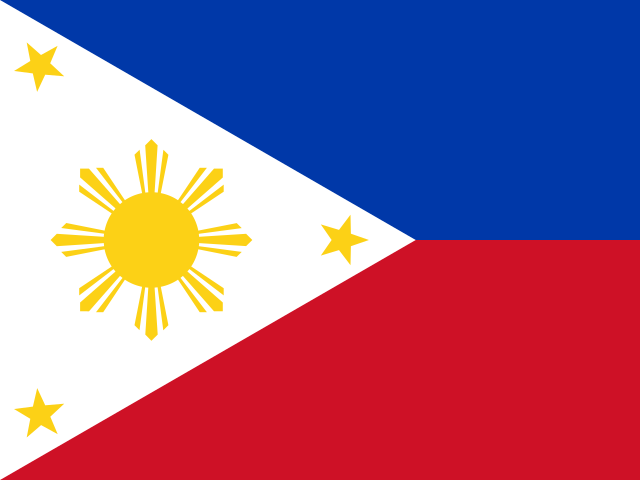
Philippines
Pilipinas
Filipino Sign Language (FSL)
Written: Filipino · English
Working with local partners
-
/esp
Spain
España
Spanish Sign Language (LSE)
Written: Español
Looking for a partner
-
/usa
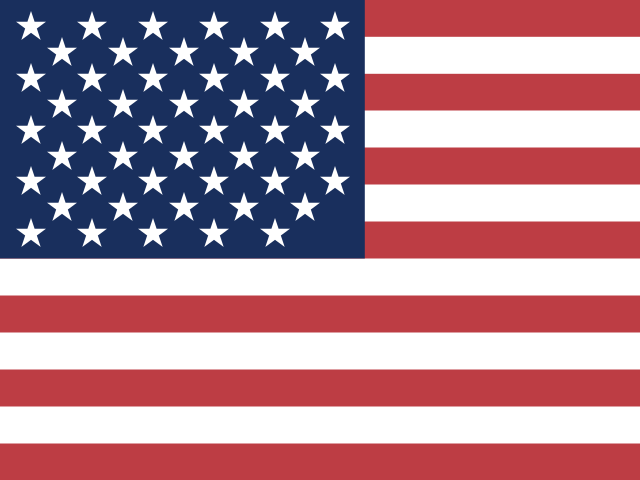
United States
American Sign Language (ASL)
Written: English · Español
Looking for a partner
-
/gbr
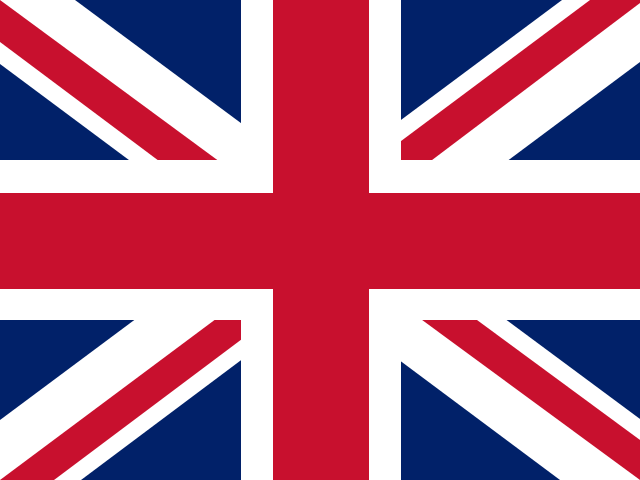
United Kingdom
British Sign Language (BSL)
Written: English
Looking for a partner
-
/jpn
Japan
日本
Japanese Sign Language (JSL)
Written: 日本語
Looking for a partner
-
/ind
India
भारत
Indian Sign Language (ISL)
Written: हिन्दी · English
Looking for a partner
-
/mas
Malaysia
Bahasa Isyarat Malaysia (BIM)
Written: Bahasa Malaysia · English
Looking for a partner
-
/ina
Indonesia
Bahasa Isyarat Indonesia (BISINDO)
Written: Bahasa Indonesia
Looking for a partner
-
/bra
Brazil
Brasil
Língua Brasileira de Sinais (Libras)
Written: Português
Looking for a partner
-
/tha
Thailand
ประเทศไทย
Thai Sign Language (TSL)
Written: ภาษาไทย
Looking for a partner
-
your country
Not here yet?
Pages open where there is a local Deaf creator, one real local fact, and someone to keep it current. Tell us about your country — or suggest a partner we should talk to.
Our rule
A thin page is worse than no page.
A country page is a production commitment. Two kinds exist, and we say which is which:
- A full page opens when a local Deaf creator has recorded it in the national sign language — named and paid — there is at least one real local fact with a source, and someone owns keeping it current.
- A page with an open partner search carries the country's real situation and numbers, names the sign language, and says plainly that we have no partner there yet. It claims no traction, because there is none to claim.
What you will not find is a country page that implies work we have not done.
What every country page carries
- The numbers Deaf and hard of hearing, blind and low vision, and how many people sign — each with its source, or an honest gap.
- The language The national sign language, named, with its ISO code. This is the credibility marker with every Deaf community.
- The law What is already mandated there, and where the comprehension gap stands.
- The status Whether we have a partner there — and if not, how to suggest one.